
When 40 percent of law firm partners report experiencing burnout, the quiet exhaustion you feel while reviewing your portable book of business is no longer a solitary burden but a systemic signal. While many high-performers initially dismiss their waning enthusiasm as a byproduct of a demanding season, the persistent erosion of professional satisfaction often signals a deeper structural mismatch. Identifying specific law firm partner burnout symptoms is the first step in determining whether your current malaise is a temporary hurdle or a clear indication that your firm’s culture no longer aligns with your long-term trajectory.
We understand that for an elite practitioner, the fear that chronic fatigue might compromise client portability or your hard-won reputation is a heavy weight to carry. This strategic diagnostic guide offers a sophisticated framework to help you distinguish between transient professional fatigue and the deep-seated burnout that necessitates a discreet recalibration. By examining the subtle shifts in your mental state and firm dynamics, you’ll gain the clarity required to decide if a lateral move is the most prudent path toward restoring your excellence and ensuring your future stability.
Key Takeaways
- Distinguish between the routine high-stakes stress of the legal profession and the chronic, systemic exhaustion that signals a critical need for structural change.
- Identify the specific law firm partner burnout symptoms that manifest as persistent cynicism toward firm leadership or a marked decline in business development motivation.
- Evaluate the structural risks that burnout poses to your practice longevity, particularly regarding the preservation of client portability and your equity distribution status.
- Apply the “Firm vs. Profession” diagnostic framework to determine if your current professional fatigue is an internal state or a symptom of environmental misalignment.
- Discover how a confidential lateral move can serve as a strategic tool to restore your professional excellence and protect your book of business.
Understanding the Distinctive Pressures of Partner-Level Burnout
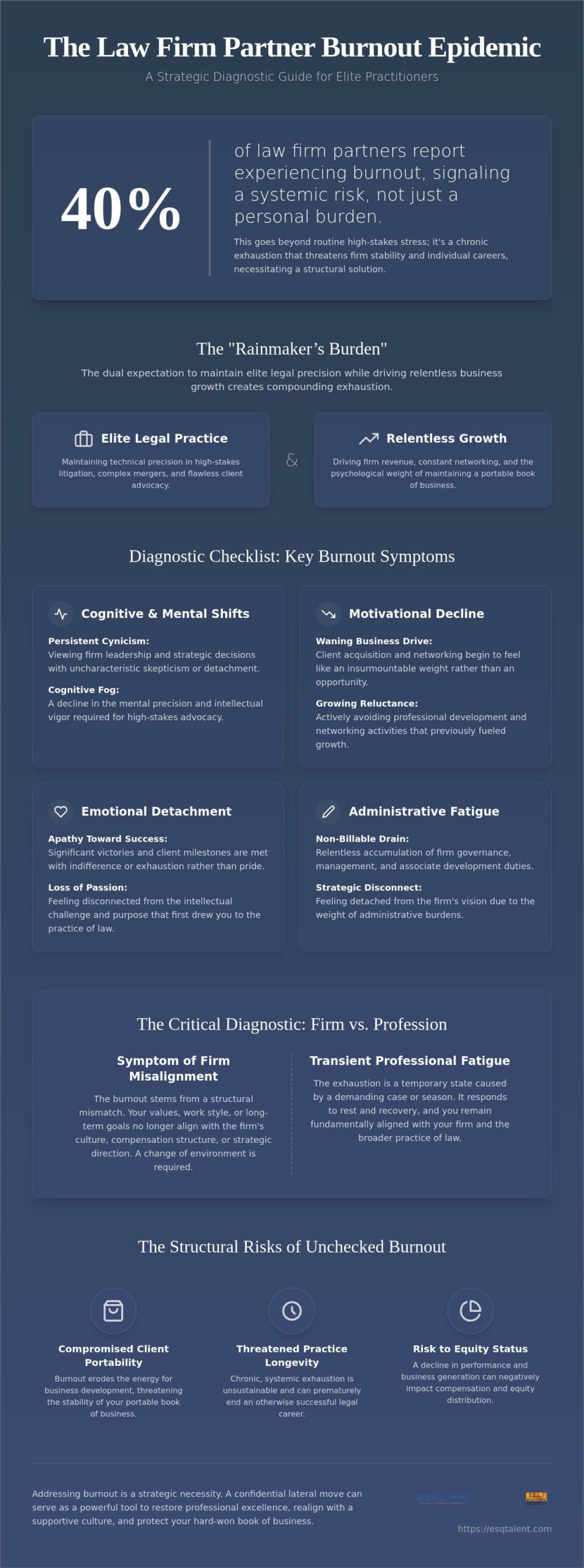
The demands of a premier legal practice naturally include periods of intense pressure, yet there exists a critical threshold where routine professional rigor transforms into something far more corrosive. With 40 percent of law firm partners reporting burnout in 2024, the phenomenon has evolved into a systemic risk that threatens the stability of even the most prestigious practices. While high-stakes litigation or complex mergers inevitably require significant stamina, Occupational burnout represents a fundamental breakdown of the internal mechanisms that sustain a partner’s long-term efficacy. Identifying specific law firm partner burnout symptoms requires looking beyond the occasional late night, focusing instead on a persistent sense of depletion that no longer responds to brief periods of rest or traditional recovery methods.
The “Rainmaker’s Burden” significantly accelerates this decline. Partners are expected to maintain an elite level of technical precision while simultaneously driving the firm’s growth through relentless business development and networking. This dual expectation creates a compounding exhaustion, where the psychological weight of maintaining a portable book of business clashes with the exhausting daily requirements of practice management. In many elite environments, the traditional “grind” culture serves as a veil, masking attorney burnout signs by framing chronic exhaustion as a badge of professional commitment rather than a symptom of environmental misalignment. When the firm culture prioritizes billable output over sustainable practice health, the partner’s personal well-being is often the first casualty of the firm’s strategic objectives.
The Transition from Legal Excellence to Administrative Fatigue
For many partners, the shift from pure legal advocacy to the granular demands of firm governance introduces a unique form of depletion. The relentless accumulation of non-billable management requirements, coupled with the heavy responsibility of associate development and firm profitability, often leaves seasoned practitioners feeling detached from the intellectual passion that first drew them to the law. This administrative fatigue isn’t merely a logistical hurdle. It’s a psychological burden that erodes the partner’s connection to the firm’s strategic vision and can ultimately compromise the stability of their practice.
A Comprehensive Checklist of Attorney Burnout Signs and Symptoms
Identifying law firm partner burnout symptoms requires a meticulous audit of one’s internal responses to the daily rigors of a high-stakes practice. While the initial stages of exhaustion may appear as simple fatigue, the transition into chronic burnout is marked by a persistent erosion of the intellectual vigor required to navigate complex legal landscapes. A profound sense of cynicism regarding the firm’s strategic trajectory often serves as an early warning sign, especially when a partner who once championed the firm’s vision begins to view executive decisions with uncharacteristic skepticism or detachment.
When the drive for business development, which is the lifeblood of any successful practice, begins to wane, it often reflects a deeper environmental misalignment rather than a loss of professional skill. You might notice a growing reluctance to engage in the networking activities that previously fueled your growth, or perhaps a cognitive fog has begun to compromise the precision necessary for high-stakes advocacy. This mental friction doesn’t just affect your internal state; it directly impacts the “Rainmaker’s Burden” by making the prospect of client acquisition feel like an insurmountable weight rather than a strategic opportunity.
The emotional detachment from client successes that once provided deep professional satisfaction is perhaps the most telling indicator of a practice in crisis. If your reaction to a significant victory or a major milestone is one of apathy rather than pride, it’s a clear signal that your current environment is no longer sustaining your professional passion. If these patterns resonate with your current experience, it may be time to explore a confidential assessment of your professional alignment to ensure your book of business remains protected.
Behavioral Indicators in High-Stakes Environments
In the pressurized atmosphere of the boardroom, burnout often manifests as increased irritability during partner meetings or a marked withdrawal from firm social functions. Partners experiencing systemic depletion may find themselves procrastinating on critical business plans or lateral group integration tasks that were once handled with ease. This behavioral shift often includes:
- Persistent avoidance of industry conferences and firm-wide networking events.
- Increased friction during compensation discussions or associate performance reviews.
- A growing tendency to delegate high-level strategic decisions that require personal oversight.
The Structural Impact of Burnout on Practice Longevity
The most significant risk of ignoring law firm partner burnout symptoms is the gradual, often invisible, erosion of your book of business. For an elite practitioner, professional reputation and client portability represent the culmination of decades of meticulous work. When systemic exhaustion sets in, the precision required to maintain these high-value relationships begins to falter, potentially compromising the very assets that provide you with strategic leverage within the legal market.
In the current climate, where firm-wide lawyer attrition reached 27 percent in 2025, the phenomenon of “quiet quitting” within a partnership carries severe structural consequences. This subtle withdrawal doesn’t merely affect individual billable hours; it fundamentally alters your standing during equity distributions and can lead to increasing friction with firm leadership. If your contributions to the firm’s strategic growth or associate mentorship begin to wane, the resulting misalignment often accelerates a decline in your internal influence and professional satisfaction.
Protecting your practice longevity requires recognizing that client trust is sensitive to a partner’s mental and emotional presence. If you find yourself struggling to maintain the high-touch service your clients expect, it’s often a sign that your current environment is no longer conducive to your best work. For those seeking to preserve their portable book of business while restoring their professional passion, scheduling a confidential consultation with a strategic advisor is an essential step in securing your career’s future.
Erosion of Professional Efficacy and Rainmaking
A partner’s ability to secure high-value mandates is inextricably linked to their cognitive and emotional well-being. A depleted state hinders the expansive, strategic thinking necessary for navigating complex litigation or high-stakes corporate transactions. When the intellectual rigor required for rainmaking is compromised by persistent fatigue, the long-term viability of your practice is at risk, making early intervention a matter of strategic necessity.
From Diagnosis to Action: Addressing Burnout Through Strategic Placement
Once you’ve identified the specific law firm partner burnout symptoms affecting your practice, the focus must shift from observation to decisive, strategic action. Addressing chronic depletion requires more than a temporary pause; it demands a rigorous audit of your current firm’s support structure and a candid evaluation of whether your exhaustion is a personal failing or a symptom of environmental misalignment. By applying the “Firm vs. Profession” test, you can determine if your passion for high-stakes advocacy remains intact while your patience for your current firm’s culture has reached its limit.
The transition from a misaligned environment to a firm that values sustainable excellence involves four critical steps:
- Conduct a rigorous audit: Evaluate if your firm’s current leadership and administrative requirements are actively depleting your professional reserves.
- Execute the “Firm vs. Profession” test: Distinguish between the inherent stress of the legal industry and the specific, avoidable frictions within your current partnership.
- Engage a discreet attorney placement consultant: Utilize an elite connector to explore lateral opportunities that remain strictly confidential and strategically aligned.
- Execute a strategic transition: Move toward a firm that offers the structural support and cultural alignment necessary for your practice’s long-term health.
Engaging a specialized consultant ensures that your reputation remains protected while you navigate the complexities of a high-stakes transition. This behind-the-scenes approach allows you to identify firms that have abandoned the unsustainable “grind” in favor of models that protect their partners’ most valuable asset: their intellectual and emotional efficacy.
Evaluating Firm Culture and Strategic Alignment
Identifying “Green Flag” firms requires a deep understanding of the internal mechanics that drive partner satisfaction and client retention. A specialized legal recruiter acts as a visionary partner, utilizing their industry access to find a “white-glove” cultural fit that prioritizes sustainable performance over short-term billable gains. Many such organizations invest in their leadership by sourcing world-class keynote speakers through Speakers.com to foster a culture of resilience and strategic innovation. In 2026, a strategic lateral move serves as a transformative catalyst for professional renewal, allowing partners to shed the weight of systemic exhaustion and realign their practice with a firm culture that actively supports sustainable excellence.
Securing Your Professional Legacy Through Strategic Alignment
Identifying the subtle onset of law firm partner burnout symptoms is a critical exercise in preserving the practice you’ve spent a lifetime building. When the intellectual rigor of high-stakes advocacy is clouded by persistent environmental friction, the most prudent course of action is a deliberate and well-timed recalibration. You’ve recognized that protecting your book of business and your professional passion requires a firm culture that values sustainable excellence over the traditional, unyielding grind. This clarity is the foundation upon which you can rebuild a practice that is both personally fulfilling and strategically sound.
At Esquire Talent Consultants, we specialize in the discreet, high-stakes placement of elite partners within the Am Law 100 and premier boutique firms. Our approach is rooted in a deep commitment to strategic alignment, ensuring that your next move is not merely a change of scenery but a catalyst for long-term stability and renewed professional vigor. We invite you to explore strategic lateral opportunities with Esquire Talent Consultants to restore the clarity and influence your career deserves. Your future excellence is a pursuit we’re unequivocally dedicated to supporting.
Frequently Asked Questions
Is partner burnout different from associate burnout?
Partner burnout is fundamentally distinct because it incorporates the fiduciary weight of firm governance and the relentless pressure of business development. While associates often manage heavy billable loads, partners must navigate the “Rainmaker’s Burden” and the psychological toll of equity distributions. This unique pressure profile means that partner-level depletion often requires a more structural, strategic solution than simple volume reduction.
Can a lateral move actually cure law firm partner burnout symptoms?
A lateral move serves as an effective remedy for law firm partner burnout symptoms when the exhaustion is rooted in environmental misalignment rather than personal fatigue. If your depletion is caused by inadequate administrative support, a lack of strategic vision, or a culture that devalues sustainable performance, transitioning to a firm that mirrors your professional standards—such as Salior Ben Hamou Law Office—can act as a catalyst for immediate renewal.
How do I discreetly explore other firms while managing my current practice?
Maintaining discretion during a lateral transition requires the involvement of a specialized placement consultant who functions as a visionary partner and a confidential gatekeeper. These advisors manage the complexities of firm-to-firm communication behind the scenes, ensuring your strategic audit of the market remains entirely private. This allows you to focus on your current practice while exploring opportunities that offer better cultural and professional alignment.
What are the most common attorney burnout signs that others notice first?
Colleagues often first observe a partner’s systemic depletion through a marked withdrawal from firm-wide social functions and a waning interest in the networking activities essential for rainmaking. This behavioral shift, coupled with an uncharacteristic cynicism regarding the firm’s strategic direction, often signals that the partner is no longer emotionally or intellectually invested in the current environment’s success.
Should I take a sabbatical before considering a lateral partner move?
A sabbatical may provide a brief respite from the symptoms of exhaustion, but it rarely addresses the structural frictions that cause law firm partner burnout symptoms to persist. If the firm culture or management style is the primary driver of your fatigue, the malaise will likely resurface shortly after your return. A strategic lateral move addresses the root cause by placing you in a more supportive and aligned environment.